 Reviews

 Proudly American

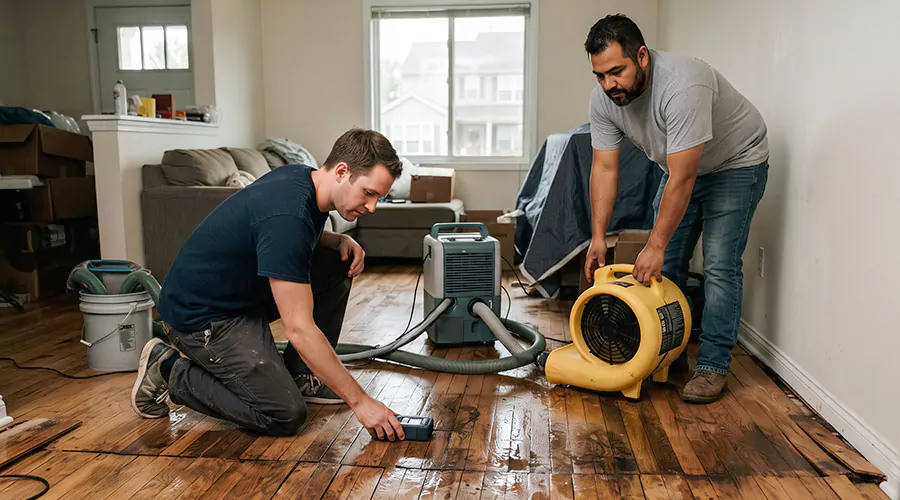
Yes, hardwood floors can often be saved after water damage when drying starts quickly and the boards remain structurally sound. Mild cupping can improve as moisture leaves the wood. Severe buckling or rot makes water damage floor repair or replacement more likely..
Wood absorbs moisture and expands. The National Wood Flooring Association notes that excess moisture can cause cupping, while standing water can lead to warping or finish damage.
Which Water Damaged Hardwood Floors Can Usually Be Saved?
Hardwood has a better chance of being saved when exposure was brief and the water came from a clean source. Floors with mild cupping or limited staining may recover after drying. Boards that remain firmly attached are better candidates than planks that have lifted.
Signs that favor repair include:
- Water came from a clean supply line.
- Drying started soon after the leak.
- Boards remain firmly attached.
- Cupping is mild.
- The subfloor remains solid.
- No rot is visible.
A current 2026 restoration guide also notes that exposure time and subfloor condition strongly affect whether hardwood can be saved.
A hardwood floor restoration decision should wait until the floor has dried enough for its final condition to become clear.
When Does Hardwood Flooring Need Replacement?
Replacement becomes more likely when boards have buckled away from the subfloor or the wood has begun to decay. Deep contamination can also make saving the floor impractical.
| Floor Condition | More Likely Outcome |
|---|---|
| Light cupping | Dry and reassess |
| Minor staining | Dry then refinish |
| Local board damage | Replace selected boards |
| Severe buckling | Partial or full replacement |
| Rot or soft wood | Replace damaged material |
| Damaged subfloor | Repair below first |
Extensive water damage and subfloor problems are common reasons replacement becomes necessary. In 2026, water-damaged hardwood repair can range from about $8 to $100 per square foot depending on severity.
Do not sand cupped flooring while moisture remains elevated. Sanding raised edges too early can leave the floor uneven after the boards return toward normal shape.
What Should You Do During the First 24 to 48 Hours?
The first two days should focus on stopping the source and removing water as quickly as conditions allow. Fast extraction limits how deeply moisture moves into seams or the subfloor. Drying must continue after visible water is gone because the underside of the boards may remain wet.
Take these steps:
- Stop the leak when it is safe.
- Remove standing clean water.
- Move rugs off the affected area.
- Remove wet items that block airflow.
- Run dehumidification.
- Track changes in the floor.
Do not use a steam mop or add more cleaning water. The NWFA advises cleaning spills quickly and avoiding wet or steam mops because excess moisture can damage wood flooring.
Trying to restore water damaged wood floor surfaces before the moisture source is controlled can trap the problem beneath later repairs.
How Do You Know When the Floor Is Dry Enough to Repair?
Hardwood is ready for repair when moisture readings stabilize near comparable dry flooring in the home. Surface appearance alone is not enough because the underside of the boards or subfloor can stay wet longer. Moisture should be checked before sanding or replacing finishes. Use a moisture meter to compare the affected area with similar dry wood. Record readings in the same locations so you can see whether moisture is falling. The NWFA recommends keeping homes around 60 to 80 degrees Fahrenheit with relative humidity between 30 and 50 percent to limit moisture-related movement.
Can Cupped or Stained Hardwood Be Refinished?
Cupped hardwood can sometimes be refinished after it has dried and stabilized. Staining may also improve through sanding when discoloration does not extend deeply into the boards. Refinishing should wait until moisture has normalized because sanding wet wood can create an uneven surface. The NWFA recommends a full sand and refinish when damage reaches the wood itself or when the existing finish no longer protects the surface. Hardwood floor refinishing may make sense when the boards are dry and the subfloor is sound. A localized wood floor restoration can also include replacing a few boards before the surrounding area is refinished.
What Warning Signs Mean the Damage Is Getting Worse?
Worsening damage usually appears as continued movement or loss of strength. Changes that continue after active drying can indicate moisture remains below the visible surface. Persistent odor can also point to damp material beneath the floor.
Watch for these signs:
- Boards continue rising at the edges.
- Planks pull away from the subfloor.
- Wood feels soft under pressure.
- Dark staining keeps spreading.
- A musty odor remains.
- Moisture readings stay elevated.
- The subfloor begins swelling.
- Visible growth appears around seams.
Cupping alone does not always mean the floor is lost. The NWFA explains that wood gains moisture and can cup as it swells.
When Should You Call a Professional?
Professional assessment is appropriate when the floor has severe buckling or the subfloor remains wet. Contaminated water is another clear reason to avoid ordinary DIY drying. Specialized moisture readings can help when the surface appears dry but boards continue changing shape.
Consider professional evaluation when:
- Sewage or outside floodwater reached the floor.
- Several rooms are affected.
- Boards have lifted.
- The subfloor feels soft.
- Moisture remains high after drying.
- Mold is visible.
How Can You Prevent Future Hardwood Water Damage?
The best prevention is to keep liquid from sitting on the surface and control indoor humidity. Small leaks become more damaging when water remains long enough to enter seams.
Use this routine:
- Wipe spills immediately.
- Check appliance hoses several times a year.
- Inspect beneath sinks monthly.
- Use leak alarms near water heaters.
- Keep indoor humidity near 30 to 50 percent.
- Avoid steam mops.
The NWFA recommends prompt spill cleanup and moisture control as part of routine wood-floor care.
Conclusion
Hardwood floors can often be saved after clean-water damage when extraction begins quickly and the wood remains structurally sound. Mild cupping does not automatically mean replacement. Severe buckling or rot changes the decision because deeper damage may already exist. Allow the floor to dry before sanding or refinishing. If moisture remains trapped below the boards, professional testing can help determine what can stay.
Frequently Asked Questions
Will cupped hardwood floors flatten after drying?
Some cupping can improve as moisture levels return toward normal. Severe deformation may still need repair.
Should wet hardwood floors be sanded immediately?
No. Sanding before the wood stabilizes can leave the floor uneven later.
Can a few damaged boards be replaced?
Yes. Local replacement can work when the surrounding flooring and subfloor remain sound.
Does black staining mean hardwood must be replaced?
Not always. The cause and depth of the stain matter more than color alone.
Can engineered hardwood be saved after water damage?
Sometimes. The answer depends on moisture exposure and whether the layers have separated.
How soon should water be removed from hardwood?
Remove standing water as soon as it is safe. Faster removal reduces moisture entering seams and the subfloor.